Shelf vs Hector
Hector Alternative
Compare Hector and Shelf to understand how enterprise equipment tracking differs from QR-first booking and custody workflows.

Hector is a cloud-based asset management platform built by a small team in Quebec City, Canada. Founded in 2011, it covers the full asset lifecycle—loan tracking, maintenance scheduling, depreciation, and software license management—with pricing based on how many assets you register. The platform supports English, French, and German, and targets IT teams, educational institutions, construction companies, and healthcare organizations.
Teams evaluating alternatives typically want a more flexible deployment model, stronger booking and kit workflows, or an open-source codebase they can inspect and self-host.
Overview: Hector vs Shelf
Hector is a proprietary SaaS tool designed for organizations that need centralized control over asset inventories. It tracks assets from acquisition through disposal, with modules for preventive maintenance (CMMS), software license management, depreciation calculations, and equipment loans. Pricing starts at around $46/month for 250 assets and scales with your inventory—up to $1,200+/month at 10,000 assets on the mid-tier plan. There is no free tier; a 15-day trial is available.
Shelf is open-source asset management software focused on the operational layer: custody handoffs, equipment bookings, kit management, and QR-driven workflows. Shelf offers a free tier for individuals, a Team plan at $67/month with unlimited users and assets, and the option to self-host from the public GitHub repository. Where Hector emphasizes lifecycle administration, Shelf emphasizes the daily movement of equipment between people and places.
Where Shelf Takes a Different Approach
1. Open Source vs Proprietary SaaS
Hector is closed-source software available only as a cloud service. You cannot inspect the code, audit security practices, or run it on your own infrastructure. If Hector's servers go down or the company changes direction, your asset data lives entirely within their platform.
The Shelf platform is open source under AGPL-3.0—organizations can review every line of code, self-host on their own servers, and modify the platform to fit internal requirements. The codebase is public on GitHub. One part carries its own terms: the Companion mobile app is source-available rather than open source, readable and usable inside your own business but not redistributable. For teams in government, healthcare, or education where data sovereignty or procurement policies require open-source software, this is a fundamental difference.
2. Predictable Pricing vs Per-Asset Billing
Hector charges based on the number of assets registered in the system across three tiers (Shield, Armor, Castle). This means your bill grows as your inventory grows—adding 500 assets to your catalog could significantly increase your monthly cost, regardless of how many people use the system. There is also a one-time setup fee, and no permanent free plan.
Shelf uses flat-rate pricing: the Team plan at $67/month includes unlimited users and unlimited assets. Whether you track 200 items or 20,000, the price stays the same. Shelf also offers a free tier for individuals getting started. For organizations with large inventories, the pricing model difference compared to Hector's per-asset billing can be substantial.
See: Pricing
3. QR-First Workflows vs Dashboard Navigation
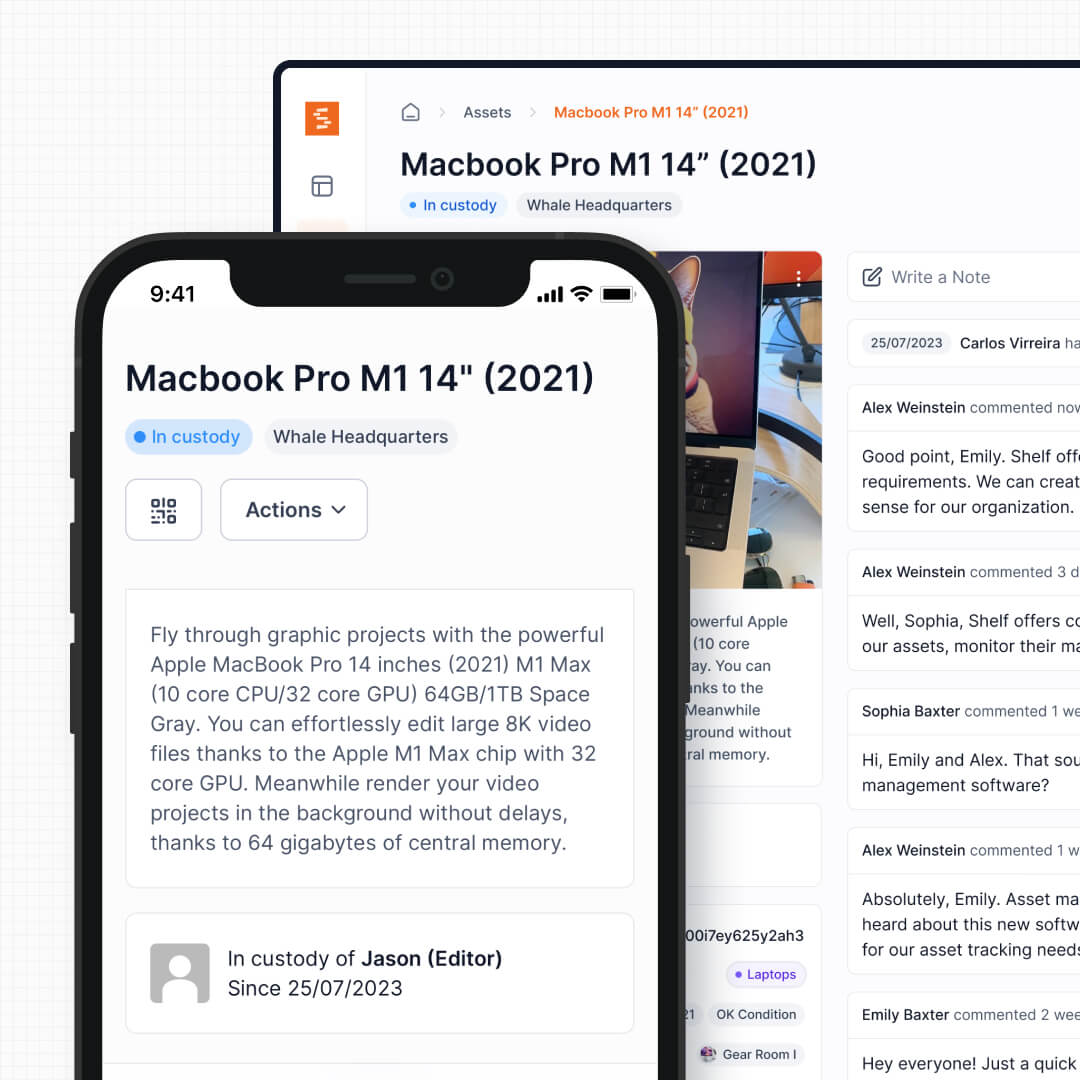
Hector supports barcode and QR code scanning through its mobile app (available on Android and iOS), primarily for identifying assets during audits and check-outs. The platform can generate barcodes in formats like UPC, EAN, and 2D codes. However, the core workflow still centers on navigating the web dashboard to manage loans and returns.
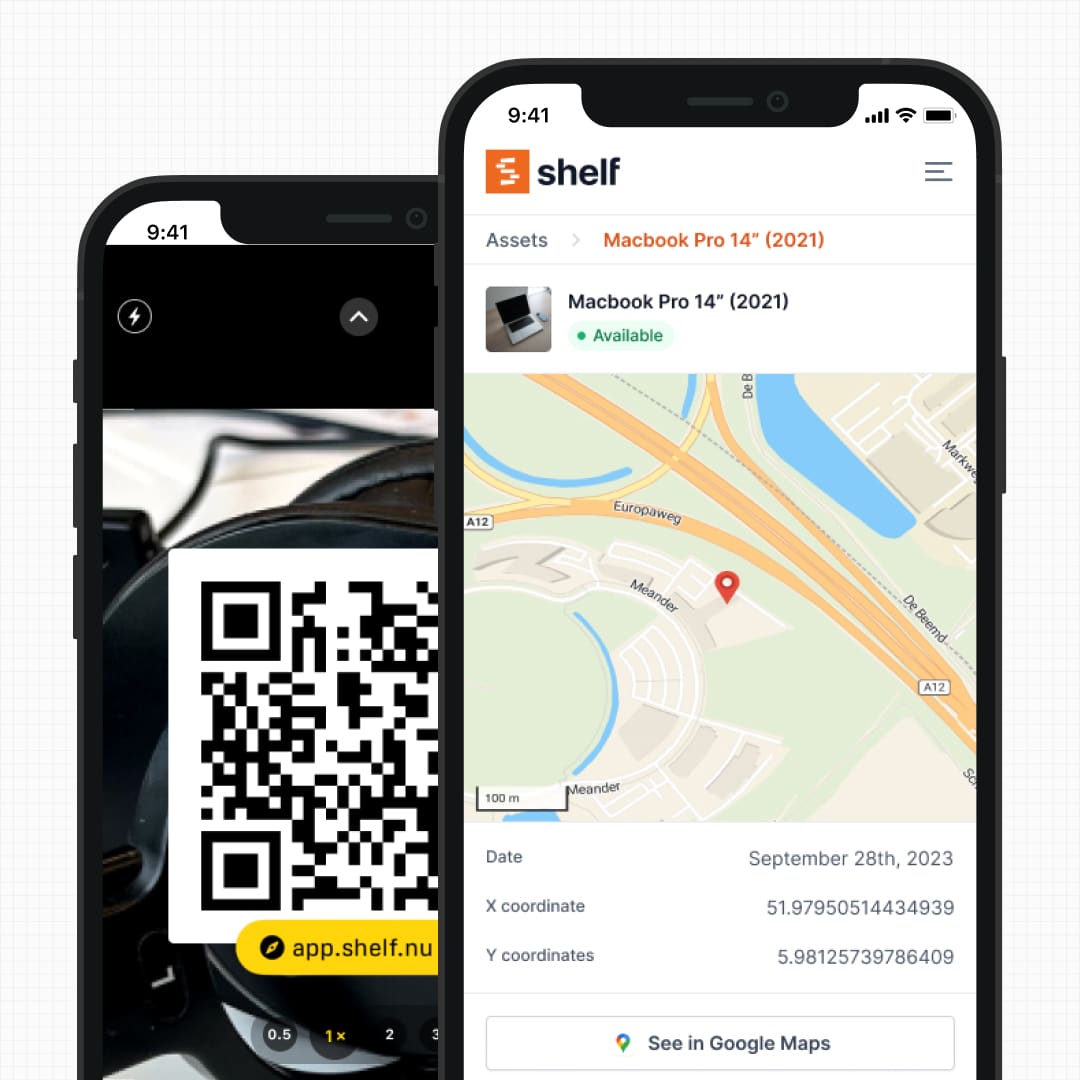
Shelf treats the QR label on the physical asset as the primary interface. Scanning a Shelf QR code immediately opens the asset’s full context—availability, custody history, booking options, and action buttons—on any device with a camera. No app download required. This makes check-out and return a five-second interaction rather than a multi-step dashboard operation.
See: Custody
4. Purpose-Built Booking System
Hector includes a loan management module that tracks which items are checked out, to whom, and for how long. It handles the logistics of lending but is not designed for scheduling shared resources in advance.
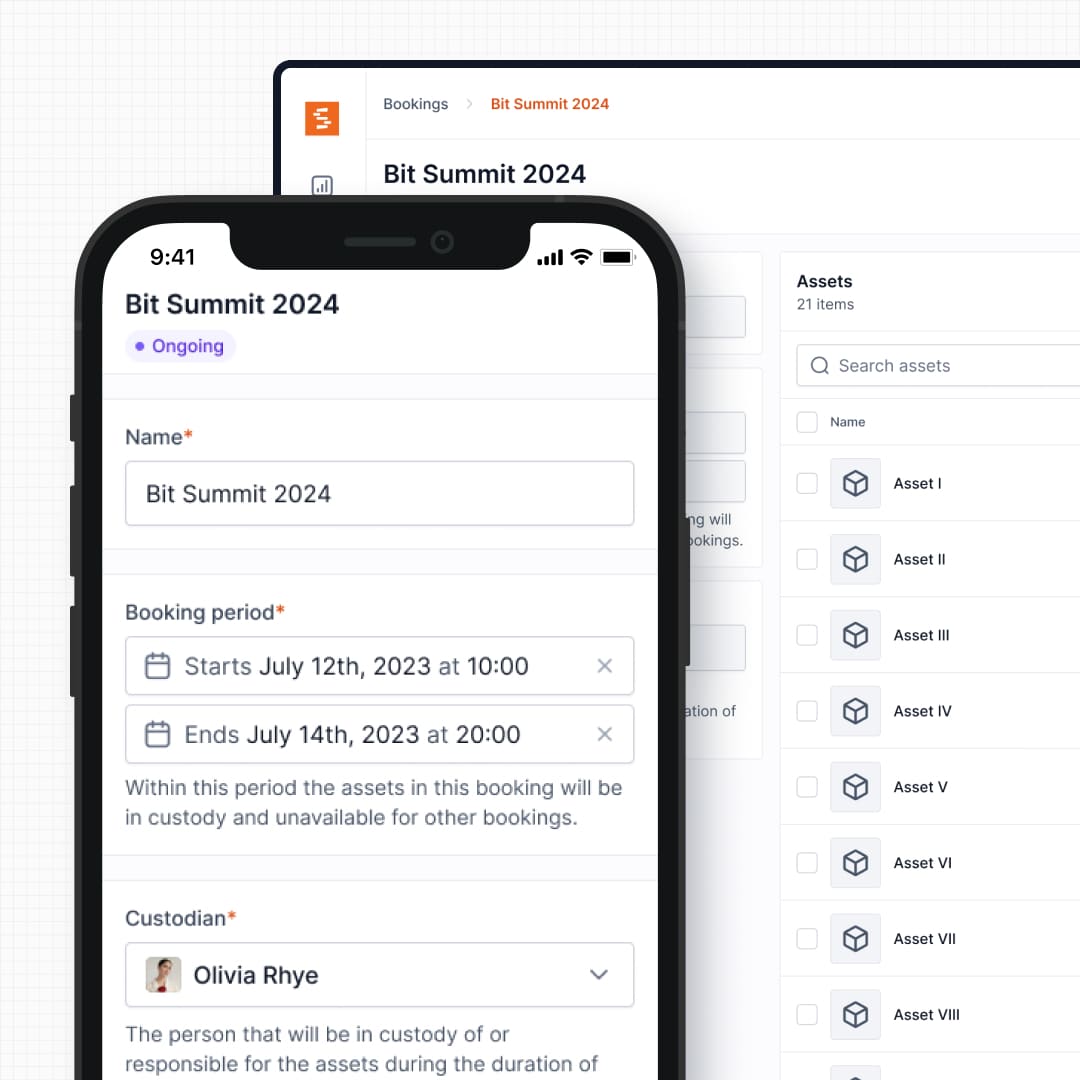
Shelf has a dedicated booking system built for environments where equipment is reserved ahead of time—production studios, university equipment rooms, shared tool cribs. The calendar shows real-time availability, prevents double-bookings automatically, and supports recurring reservations for academic terms or weekly production schedules.
See: Bookings
5. Kit Management with Component Verification
Hector tracks assets as individual records in its inventory. If you lend out a camera with two lenses, a battery pack, and a tripod, each item is a separate loan entry.
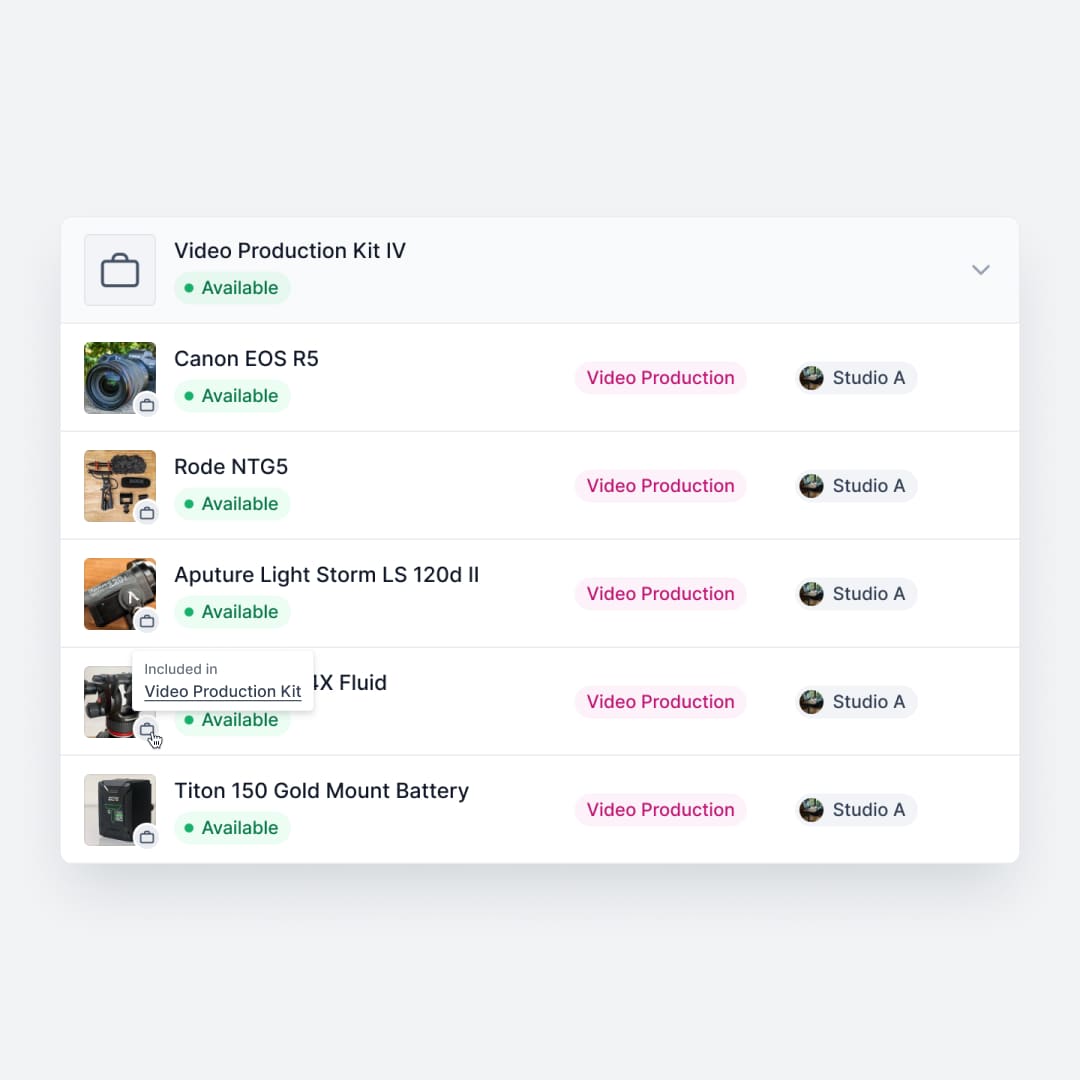
Shelf groups related items into kits. Book a camera kit, and all its components are reserved together. Return it, and Shelf verifies that every piece came back. A missing lens or cable is flagged immediately—not discovered during the next audit cycle.
See: Kits
6. Multi-Team Workspaces
Hector provides role-based access and SSO integration (including Active Directory sync), which works well for controlling who can view and manage assets within a single inventory. All users share the same asset pool.
Shelf goes further with workspaces—fully separated inventories for different departments, programs, or locations. IT, media, facilities, and education teams each get their own asset catalog, their own booking calendars, and their own reporting, while the organization maintains a unified view across all teams. This is particularly valuable for universities and multi-site organizations where different groups manage entirely different types of equipment.
See: Workspaces
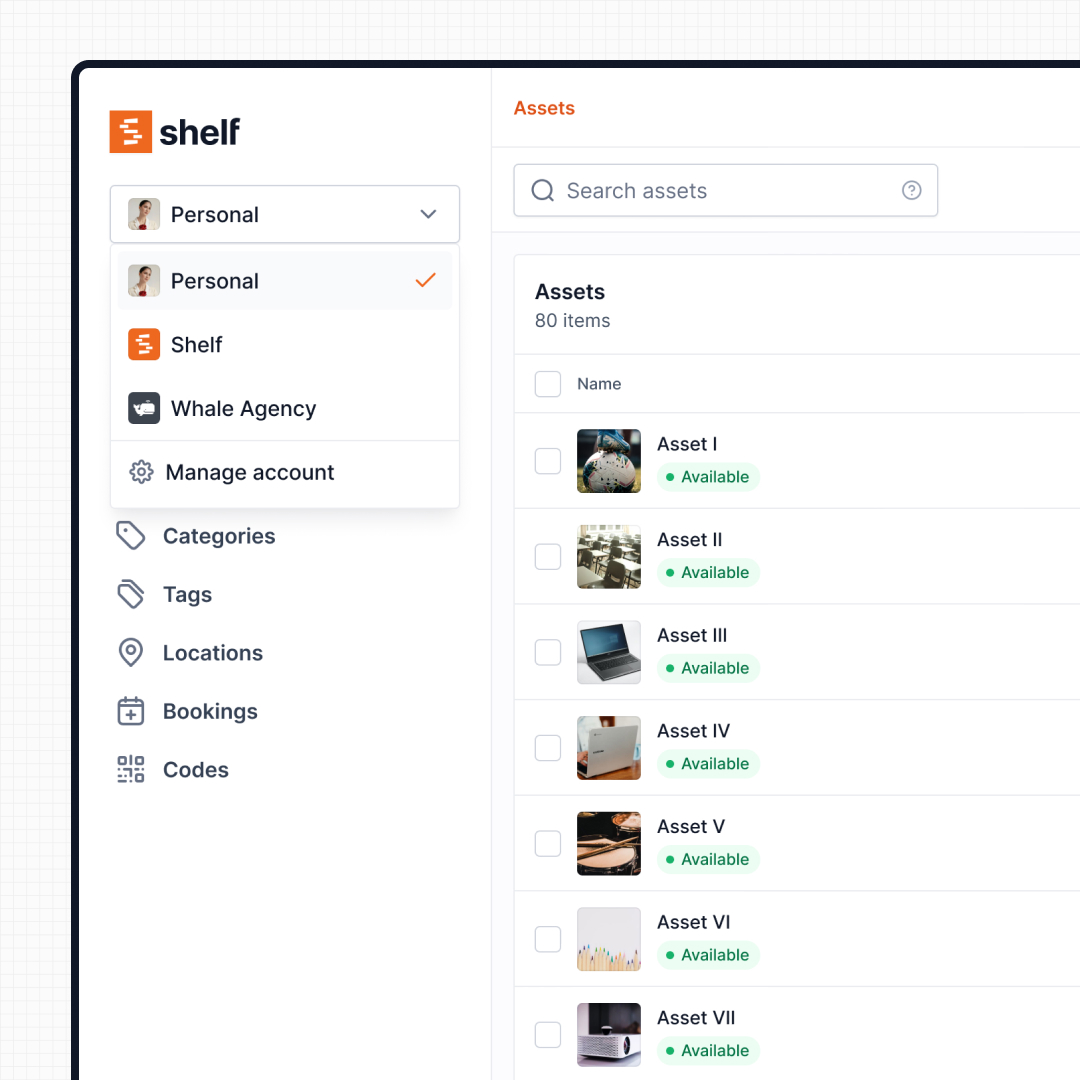
7. Location Tracking Across Sites
Hector records asset locations as a data field in each asset record—useful for static inventories, but reliant on someone manually updating the field when equipment moves.
Shelf treats location as a dynamic property—updated automatically through custody transfers, QR scans, and check-in events. You get a real-time view of where equipment is across all your sites, not just a static label that may be weeks out of date. For organizations managing equipment across multiple buildings or campuses, this provides significantly better visibility.
See: Location Tracking
Reports — Operational Visibility
Hector includes basic asset and assignment reports. Shelf includes a built-in Reports area with ready-to-run reports — Booking Compliance, Top Booked Assets, Top Booked Kits, Monthly Booking Trends, Overdue Items, Asset Inventory, Asset Activity Summary, Asset Utilization, Idle Assets, Asset Distribution, and Custody Snapshot — each with timeframe and filter controls. Every report exports to CSV; chart-based reports also export to PDF.
When Teams Choose Shelf Instead of Hector
Teams tend to choose Shelf over Hector when:
- Open-source requirements matter: Government agencies, universities, and security-conscious organizations that need source code access or self-hosting capability
- Inventory is large but the team is small: A 10-person team tracking 5,000 assets pays far less on Shelf’s per-seat model than on Hector’s per-asset billing
- Equipment moves frequently: Environments where gear is checked out, returned, and re-assigned daily benefit from QR-first workflows over dashboard-centric management
- Booking shared resources is a core need: Production studios, media departments, and equipment rooms need forward-looking reservation calendars, not just loan tracking
- Kits need to stay together: Teams lending out multi-component equipment sets (camera kits, tool kits, AV setups) need kit-aware tracking with return verification
- Multiple departments share a platform: Organizations that want department-level autonomy with organizational oversight through workspaces
- End users need zero training: Shelf’s QR-scan interface means students, technicians, and coordinators can check out equipment without learning a dashboard—reducing onboarding friction to nearly zero
When Hector May Be a Better Fit
Hector may be a stronger choice when:
- CMMS and preventive maintenance are the priority: Hector’s built-in maintenance scheduling module is designed for environments where tracking service intervals, work orders, and equipment health is the primary concern—think HVAC systems, fleet vehicles, or manufacturing equipment
- Software license management is needed: Hector includes a dedicated module for tracking software licenses, renewal dates, and compliance—a capability Shelf does not focus on
- Depreciation and financial reporting drive the workflow: Organizations whose asset management is primarily an accounting function (tracking book value, calculating depreciation, preparing for audits) may find Hector’s financial modules more directly aligned
- Active Directory sync is essential: Hector’s native AD integration and user synchronization may appeal to Windows-centric IT environments that want automatic user provisioning
- Cloud-only deployment is preferred: Teams that do not want to manage infrastructure and prefer a fully managed SaaS experience may appreciate Hector’s turnkey approach
Case Studies
See how teams use Shelf for the kinds of equipment workflows that Hector users often need:
- Eastern Michigan University — Theatre Equipment Management
- KCAI — Art College Equipment Tracking
- Fabel Film — Eliminating Double Bookings
- CES Utility Solutions — $70K Equipment Recovery
Related Solutions
Quick comparison
| Feature | Shelf | Hector |
|---|---|---|
| Free plan with unlimited assets | Varies | |
| Open source & self-hostable | ||
| QR codes with custom branded labels | Varies | |
| Custody tracking with full audit trail | Varies | |
| Equipment bookings & reservations | Varies | |
| Kit-aware check-in/check-out | Varies | |
| Location hierarchy (up to 12 levels) | Varies | |
| CSV import from any tool | Varies | |
| Works on any device (PWA) | Varies | |
| No credit card to start | Varies |
Feature availability for Hector may vary by plan. We encourage you to verify on their website.
Compatibility Checker
Will your Hector Barcodes
Work with Shelf?
Camera preview
Supported barcode types: Code128, Code39, QR Code, DataMatrix, EAN-13, EAN-8, UPC-A, UPC-E, ITF, Code93.
If your barcode doesn't scan, it may be due to camera focus, lighting, or barcode quality. This doesn't necessarily mean your code isn't supported — try again or upload a clearer image.
Ready to switch from Hector?
Create a free account and import your data in minutes. No credit card required.
Also compare
Evaluating alternatives? See how Shelf stacks up against similar tools.




Ready to organize your assets?
Join thousands of teams who trust Shelf to manage their physical assets. Free forever, or try the Team plan free for 7 days.
Out in the field? Shelf Companion is free on iPhone & Android.