

When to Track vs When to Tag: The Art & Science of Modern Asset Management


In a recent discussion that caught fire among IT professionals, a seemingly simple question sparked an intense debate: Should every piece of equipment at an employee's desk have an asset tag? The conversation that followed revealed the complexity of modern asset management, where the intersection of compliance, practicality, and human behavior creates unique challenges for every organization.
The Reality of Asset Management in 2025
At Shelf, we've observed these discussions closely because they reflect a fundamental truth: there's no one-size-fits-all approach to asset management. Let's explore why flexibility in your asset management strategy isn't just nice to have—it's essential.
Understanding the Core Concepts
Before diving deeper, let's clarify an important distinction that often gets blurred:
Asset Tracking:
- Following specific items throughout their lifecycle
- Example: Laptop #A12B3 assigned to Sarah in Marketing
- Tracks individual items with unique identifiers
- Focuses on location, custody, and status
- Critical for items where individual identity matters
Inventory Management:
- Monitoring quantities and availability
- Example: 15 keyboards in stock for Marketing
- Tracks quantities and distribution
- Focuses on stock levels and usage patterns
- Efficient for consumable or interchangeable items
Strategic Decision Making: What to Track
When to Tag
High-Value Equipment
- Laptops, desktop computers, and monitors
- Network infrastructure
- Specialized equipment and tools
- Mobile devices and tablets
- Items above your organization's value threshold
Compliance-Critical Items
- Assets requiring ISO 27001 compliance tracking
- Grant-funded equipment
- Items needing regular maintenance
- Data-storing devices
Shared Resources
- Conference room equipment
- Communal printers and scanners
- Development and testing devices
- Production equipment
When Not to Track
Low-Value Peripherals
- Basic mice and keyboards
- Standard cables and adapters
- Office supplies
- Items where tracking costs exceed value
Consumables
- Frequently replaced items
- Component parts
- Disposable equipment
The Hidden Costs of Over-Tracking
An experienced IT manager shared this compelling calculation: "Every keyboard and mouse you deploy takes an extra three minutes to tag and log. At $1 per minute in staff time, that's a 6% cost increase on a $50 item." The true cost includes:
- Time spent on asset tag creation and application
- Database maintenance and updates
- Tracking and reconciliation efforts
- End-of-life processing
- Training and compliance monitoring
- Audit preparation and support
Smart Tag Placement Strategies
The physical placement of asset tags is crucial for both efficiency and longevity:
Computers & Laptops
- Place on flat, visible surfaces
- Avoid heat-generating areas
- Position near manufacturer's serial number
- Use durable QR code labels
Monitors & Displays
- Bottom edge or back panel
- Avoid ventilation blockage
- Consider visibility when mounted
Network Equipment
- Front panel for rack-mounted equipment
- Avoid blocking ports/indicators
- Use heat-resistant labels
Mobile Devices
- Consider internal tracking
- Back panel placement
- Implement mobile tracking
Modern Solutions for Modern Challenges
While physical tagging remains important, modern asset management requires a sophisticated approach:
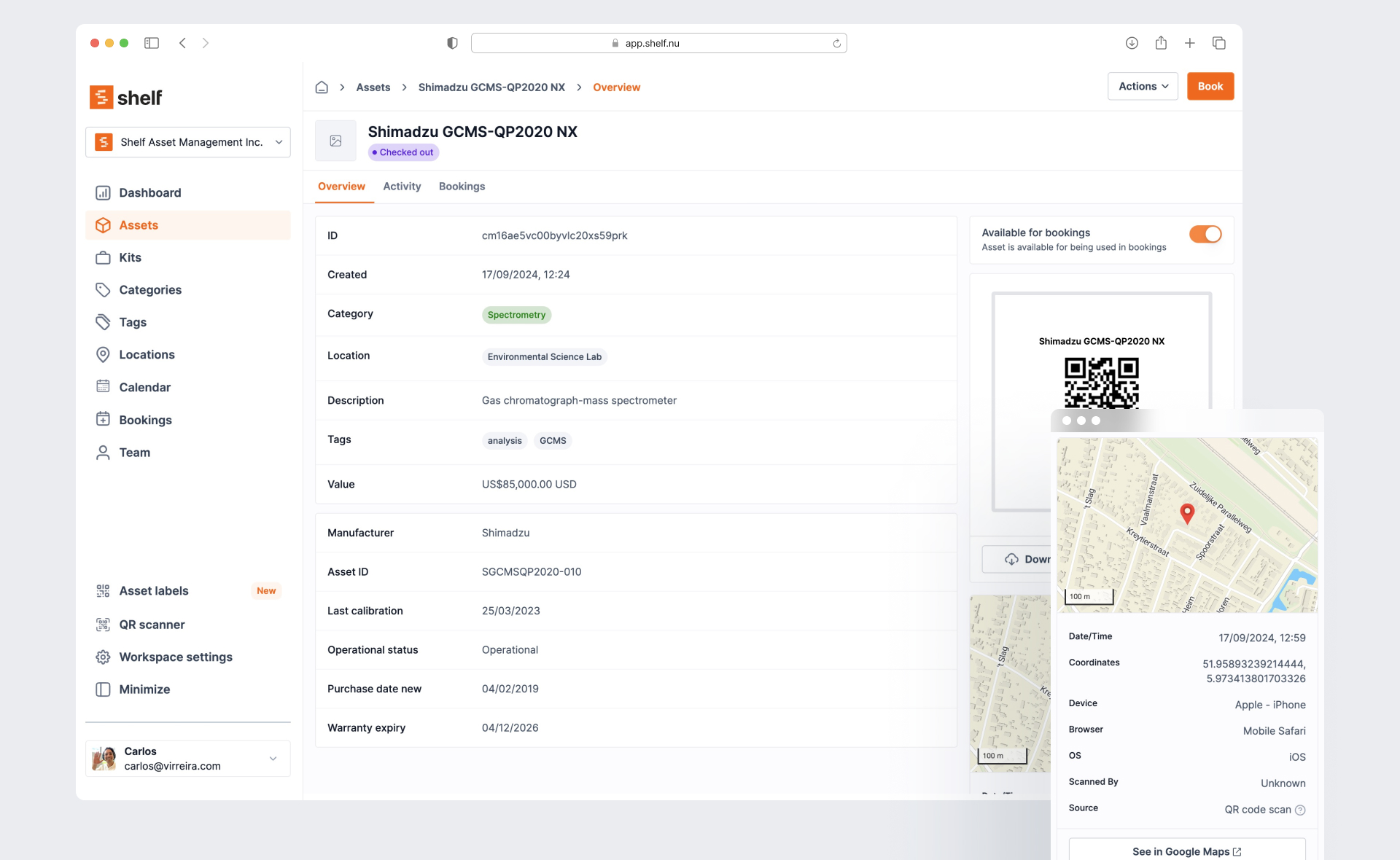
QR Code Integration
- Quick information access
- Mobile-friendly scanning
- GPS location tracking
- Real-time status updates
Smart Automation
- Maintenance reminders
- Check-in/check-out tracking
- Usage analytics
- Booking system integration
Implementation Best Practices
Define Clear Categories
- Document what gets tracked individually
- Establish group/location tracking policies
- Set quantity tracking guidelines
- Review regularly
Train Your Team
- Proper scanning techniques
- Asset entry procedures
- Exception handling
- Regular updates
Leverage Technology
- Automate routine tasks
- Generate insightful reports
- Track patterns and trends
- Support mobile auditing
Conclusion
The key to successful asset management isn't about tracking everything – it's about finding the right balance for your organization. Whether you're managing IT assets, production equipment, or educational resources, the goal is to find the sweet spot between visibility and efficiency.
At Shelf, we're committed to providing the flexible infrastructure you need to implement whatever tracking strategy works best for your organization. Remember: The goal isn't perfect tracking of every item—it's optimal management of your resources to support your organization's mission.
Want to learn more about implementing an effective asset management strategy? Check out our features or book a demo to see how Shelf can help streamline your asset tracking workflow.
Ready to organize your assets?
Join thousands of teams who trust Shelf to manage their physical assets. Free forever, or try the Team plan free for 7 days.
Out in the field? Shelf Companion is free on iPhone & Android.
More from the blog
Asset Panda Pricing in 2026: Plans, Minimums and What It Really Costs
Asset Panda no longer lists prices on its website. Here is every figure we could source and date: its last public price list, third-party reports, seat minimums, extra users, onboarding, and worked totals for three real team shapes.
Asset Register Template (Excel) and Equipment Inventory List
A free fixed asset register template in Excel with straight-line depreciation formulas, plus an equipment inventory list in Excel and CSV that imports into Shelf. What a register must contain, how to fill it in a day, and when a spreadsheet stops being enough.

Asset Tags: Types, Materials, Numbering and Placement
What an asset tag is and what it must carry, tag types and materials compared, a numbering format with check digits, where to put tags on laptops, cameras, tripods, tools, chairs and vehicles, and what government property tags require.