Shelf vs Asset Infinity
Asset Infinity Alternative
Compare Asset Infinity and Shelf to see how RFID-centric tracking differs from QR-first asset operations.

Asset Infinity is a cloud-based asset management platform developed by PcsInfinity, with offices in the UAE and India. The platform is built around multi-technology tagging support--barcodes, QR codes, RFID, and NFC--along with modules for depreciation management, preventive maintenance, inventory tracking, and compliance auditing. Asset Infinity targets mid-market and enterprise organizations across industries like manufacturing, healthcare, oil and gas, and facilities management. Teams evaluating alternatives typically find that Asset Infinity's strength in hardware-integrated tracking and financial compliance comes with complexity that outweighs its benefits when daily operations center on equipment circulation, bookings, and custody accountability.
Overview: Asset Infinity vs Shelf
Asset Infinity uses asset-based pricing, where cost scales with the number of assets tracked. Plans start around $49/month for smaller inventories and increase significantly at scale--$490/month for 100 assets, $990/month for 500 assets, and $1,490/month for 1,000 assets, with enterprise pricing on request. All plans include unlimited users, which is a genuine strength. The platform offers broad tracking technology support (RFID, NFC, barcodes, QR codes) and integrations with ERP systems like SAP, Oracle, and Microsoft Dynamics.
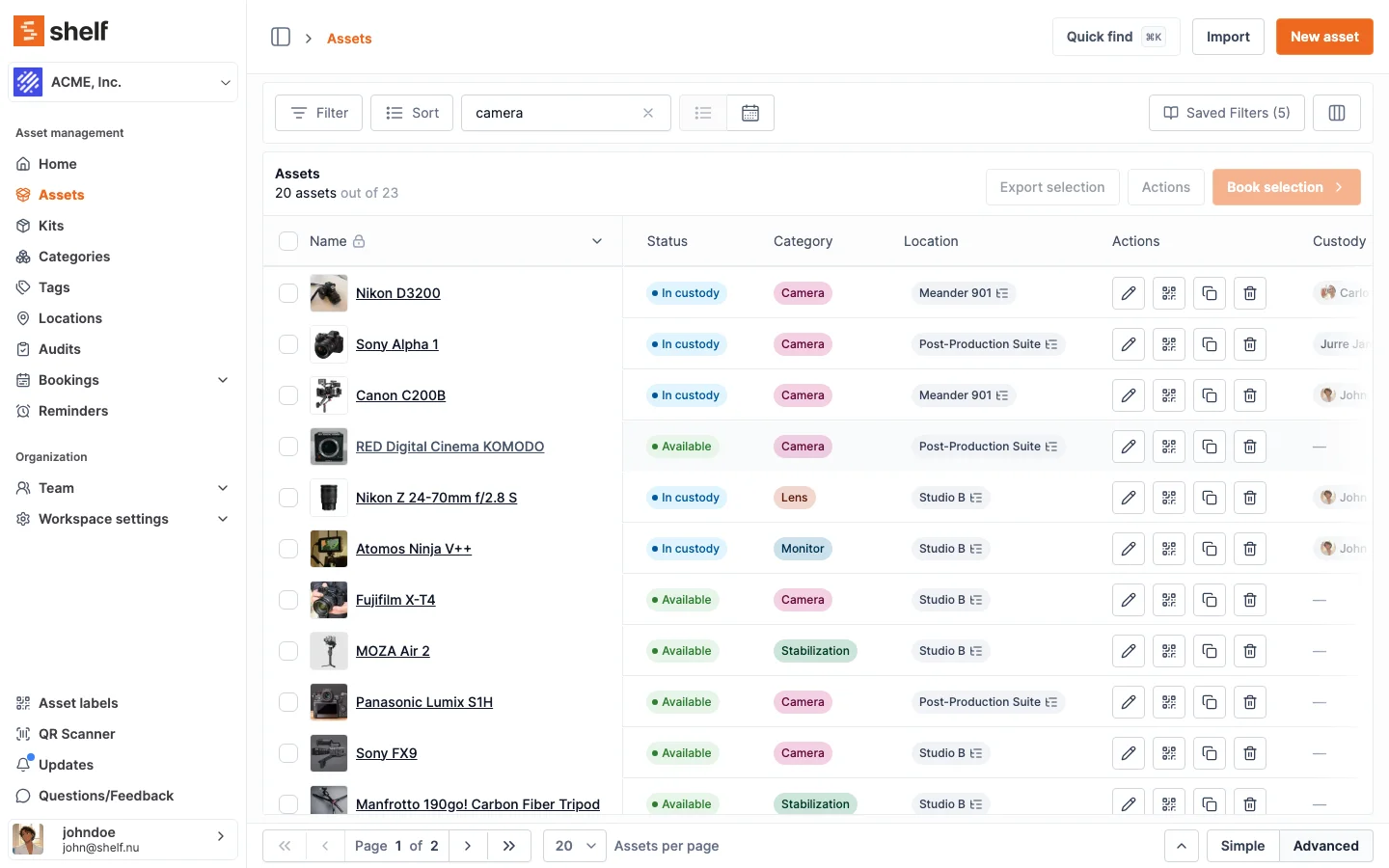
Shelf takes a fundamentally different approach. Instead of charging per asset or requiring specialized hardware, Shelf focuses on what happens when people interact with equipment: scan a QR code to check out, return, transfer custody, or confirm a booking. Location and accountability are captured as part of the workflow, not through separate hardware infrastructure. Shelf is also open source, giving teams the option to self-host, inspect the codebase, or extend functionality without vendor lock-in.
Quick Comparison
| Capability | Asset Infinity | Shelf |
|---|---|---|
| Primary focus | Multi-technology tracking + depreciation + maintenance | Equipment check-out, booking, custody |
| Pricing model | Per-asset tiers (from ~$49/month) | Free (self-hosted) or managed cloud |
| Tracking technology | RFID, NFC, barcode, QR | QR-first, no hardware needed |
| Depreciation management | Yes — straight-line and WDV methods | No |
| Equipment booking | Not a core feature | Built-in with conflict prevention |
| Kit management | Individual asset tracking only | Kit-aware booking and verification |
| Maintenance scheduling | Yes — preventive and breakdown | No |
| Open source | No — proprietary SaaS | Yes — full codebase available |
| Unlimited users | Yes (all tiers) | Yes, on Team |
| ERP integrations | SAP, Oracle, Dynamics, Intune | Not a current focus — open source codebase and CSV import/export |
| Mobile experience | Native app (reviewers note performance issues) | Native iOS & Android app (Shelf Companion) + mobile web |
| Multi-team workspaces | Single inventory with role-based access | Separated workspaces per department |
| Operational reports | Comprehensive register, depreciation, and audit reports | Built-in operational reports (booking compliance, top booked assets and kits, utilization, idle, custody, distribution) with CSV/PDF export |
Where Shelf Takes a Different Approach
1. Custody Workflows vs Asset Ledger Tracking
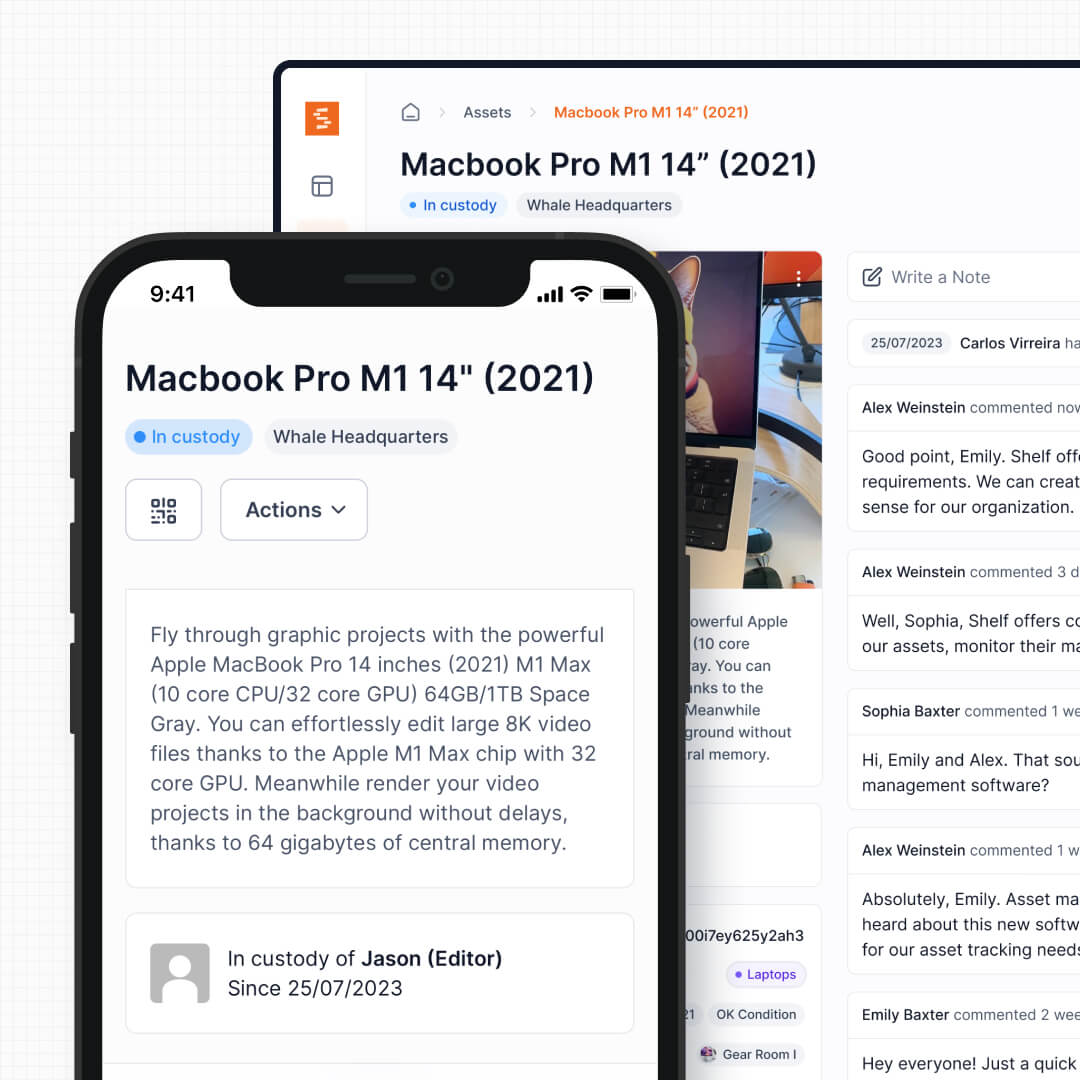
Asset Infinity excels at recording asset movements in a ledger--check-in timestamps, location transfers, employee assignments. But the interaction model is administrative: someone logs into the system and updates records. Shelf's custody system makes the person holding the equipment the active participant. Scanning a QR code transfers custody instantly, creates an accountability chain, and shows who has the asset, when it's due back, and who needs it next. For shared equipment environments, this real-time accountability matters more than retroactive ledger entries.
See: Custody
2. No Hardware Investment to Get Started
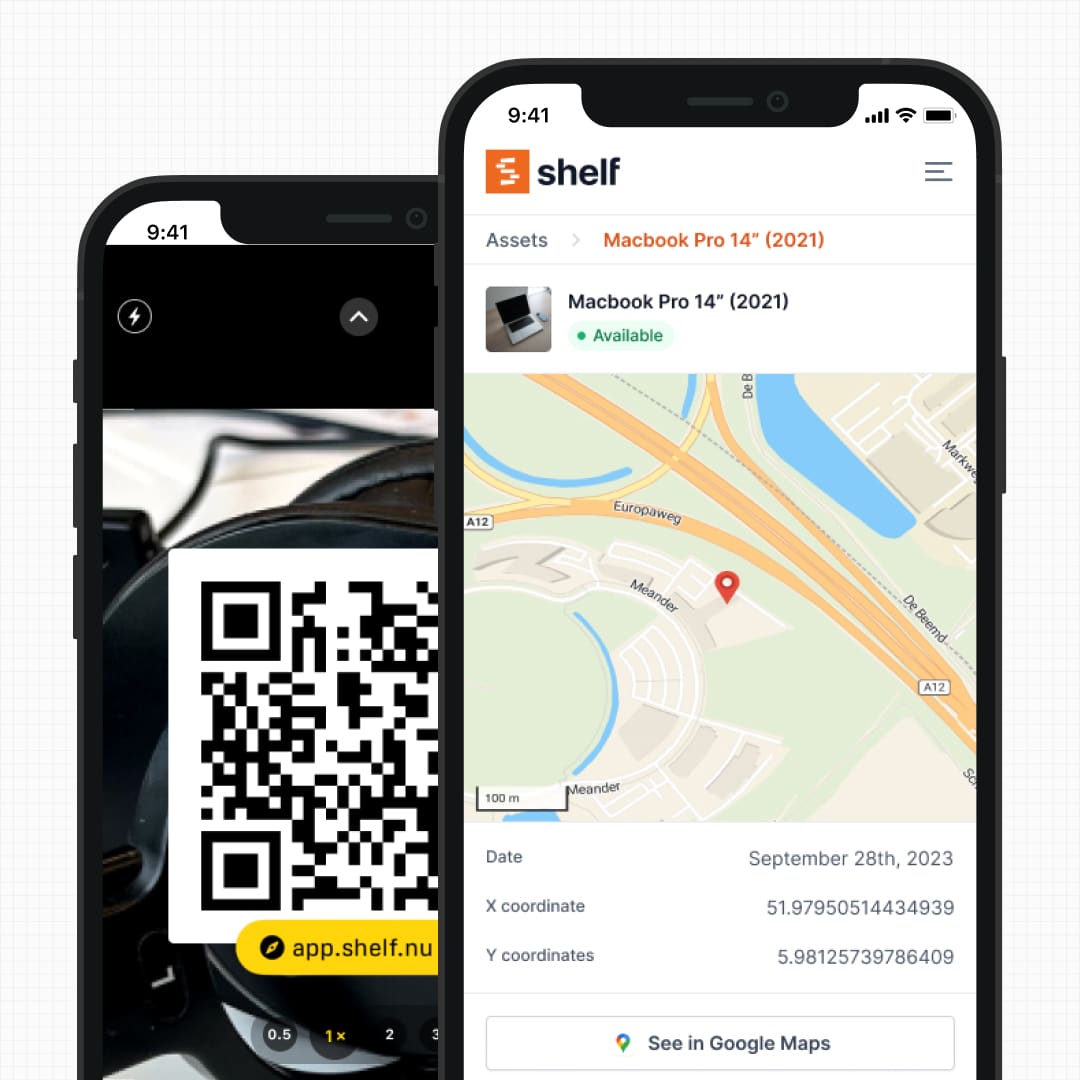
Asset Infinity supports RFID readers, NFC tags, and barcode scanners--but that flexibility comes with procurement overhead. Fixed RFID readers for doorway tracking, handheld readers for audits, and compatible tags for every asset add hardware costs that can rival the software subscription itself. For a 500-asset deployment, tags and readers alone can run into thousands of dollars before a single asset is tracked.
Shelf uses printed QR labels that cost pennies per asset. Any smartphone camera becomes the scanner. No batteries to replace, no reader firmware to update, no signal dead zones in basements or metal-heavy environments where RFID struggles.
See: Location Tracking
3. Purpose-Built Booking and Reservations
Asset Infinity's core modules focus on tracking, maintenance, and depreciation. Equipment reservation--scheduling who gets which gear on which dates--is not a primary workflow in the platform. Teams that share laptops, cameras, tools, or lab equipment between users end up managing availability outside the system, typically in spreadsheets or email threads.
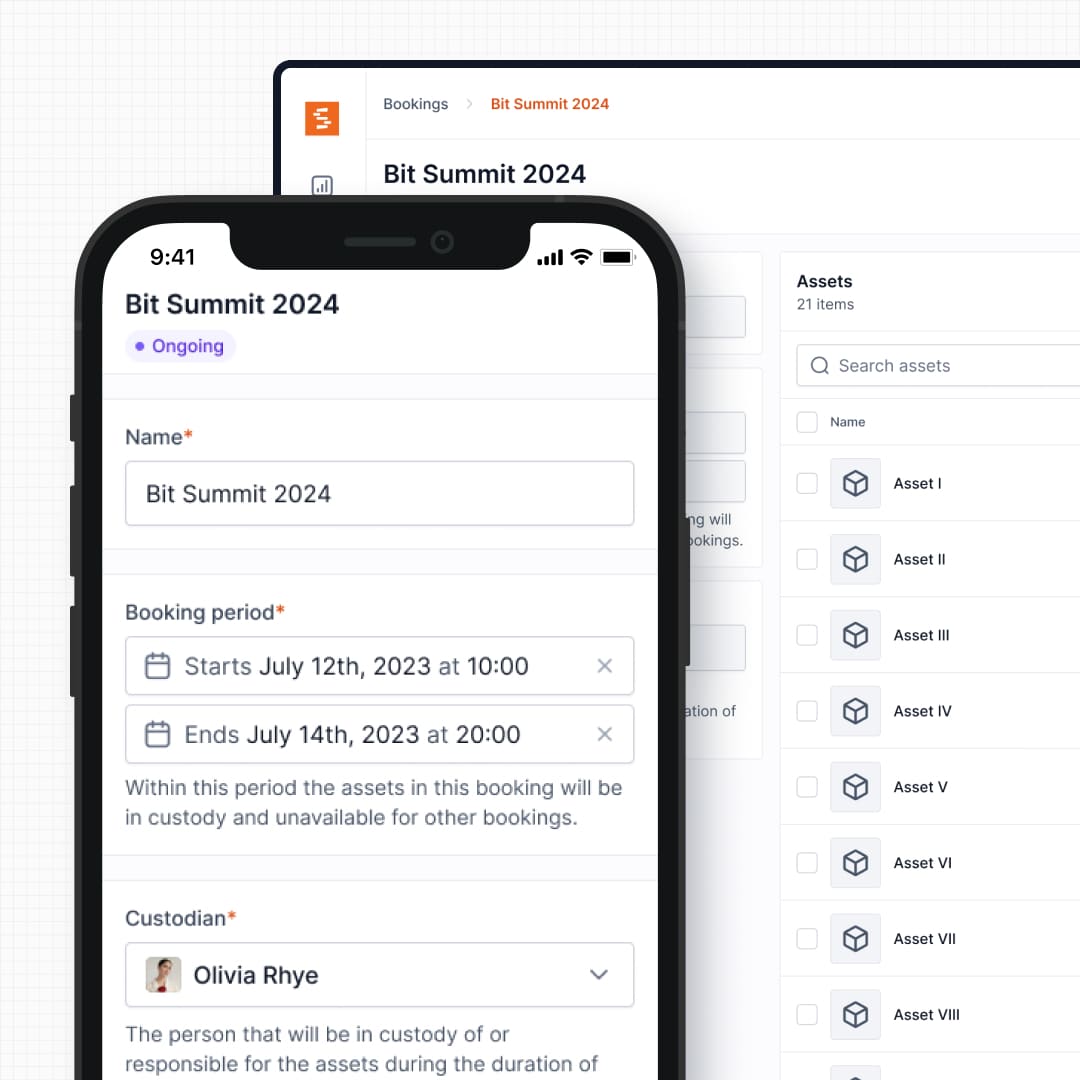
Shelf's booking system handles high-frequency equipment sharing natively: real-time availability calendars, automatic double-booking prevention, and multi-day reservation support. This matters for film crews scheduling camera packages, universities managing student gear loans, or IT teams coordinating laptop pools across departments.
See: Bookings
4. Kit Tracking and Component Verification
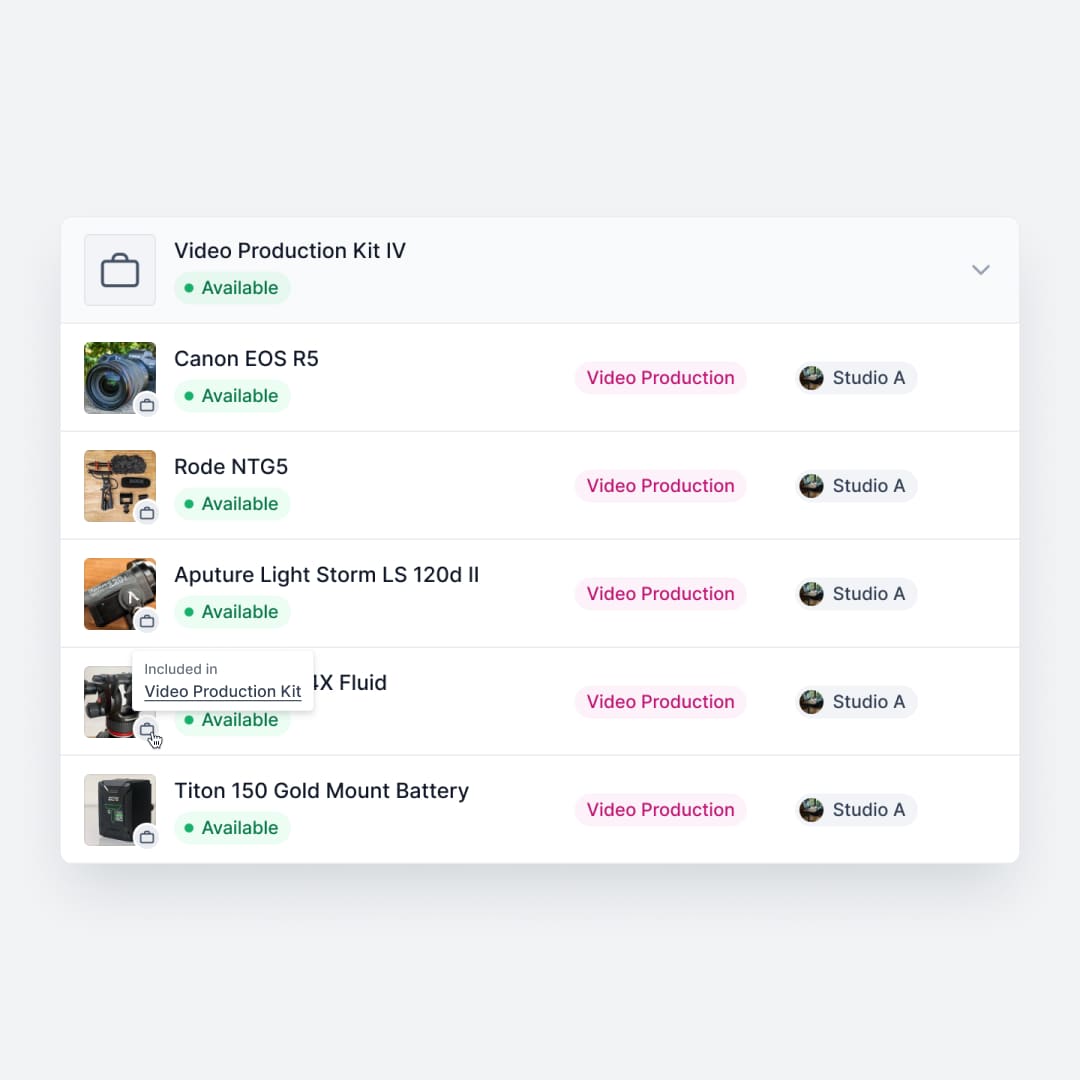
Asset Infinity tracks assets as individual records. If you manage an audio kit with a mixer, four microphones, cables, and a carrying case, those are six separate items with no inherent grouping. Auditing whether the kit is complete requires checking each item manually.
Shelf groups related equipment into kits that are booked, checked out, and verified as a single unit. When a kit returns missing an accessory or adapter, Shelf flags the discrepancy before the next user picks it up. This prevents the slow bleed of accessories and components that plagues shared equipment operations, especially in media production and education.
See: Kits
5. Pricing Simplicity and Open Source
Asset Infinity's per-asset pricing means costs increase as your inventory grows. Tracking 1,000 assets at $1,490/month is a significant line item, and organizations with larger inventories need custom enterprise quotes. The pricing model creates a direct tension: the more thorough your tracking, the more you pay.
Shelf is open source with transparent pricing. Teams can self-host for free or use the managed cloud service. There are no per-asset charges, no features locked behind opaque enterprise tiers, and no vendor lock-in. Your data and deployment are yours to control.
6. Mobile-First Experience
Asset Infinity offers native mobile apps for iOS and Android, but reviewers on Capterra and G2 consistently note that the mobile app can be slow and that the interface is better optimized for desktop use. For teams doing equipment check-outs on loading docks, in gear rooms, or across campus, mobile performance is not optional--it is the primary interface.
Shelf is designed mobile-first. QR scanning, custody transfers, and booking confirmations all work in any smartphone browser, and the free Shelf Companion app is on the App Store and Google Play for a native experience on iPhone and Android. Either path, there are no app store updates to manage on the web side, and the phone gets the same feature set as the desktop rather than a cut-down one.
See: Asset Tracking
7. Multi-Team Workspaces
Asset Infinity organizes assets into a single inventory with role-based access controls. This works for single-department deployments but becomes cumbersome when multiple teams--IT, facilities, media production, education--need to manage their own equipment independently within the same organization. Cross-department visibility comes at the cost of cross-department clutter.
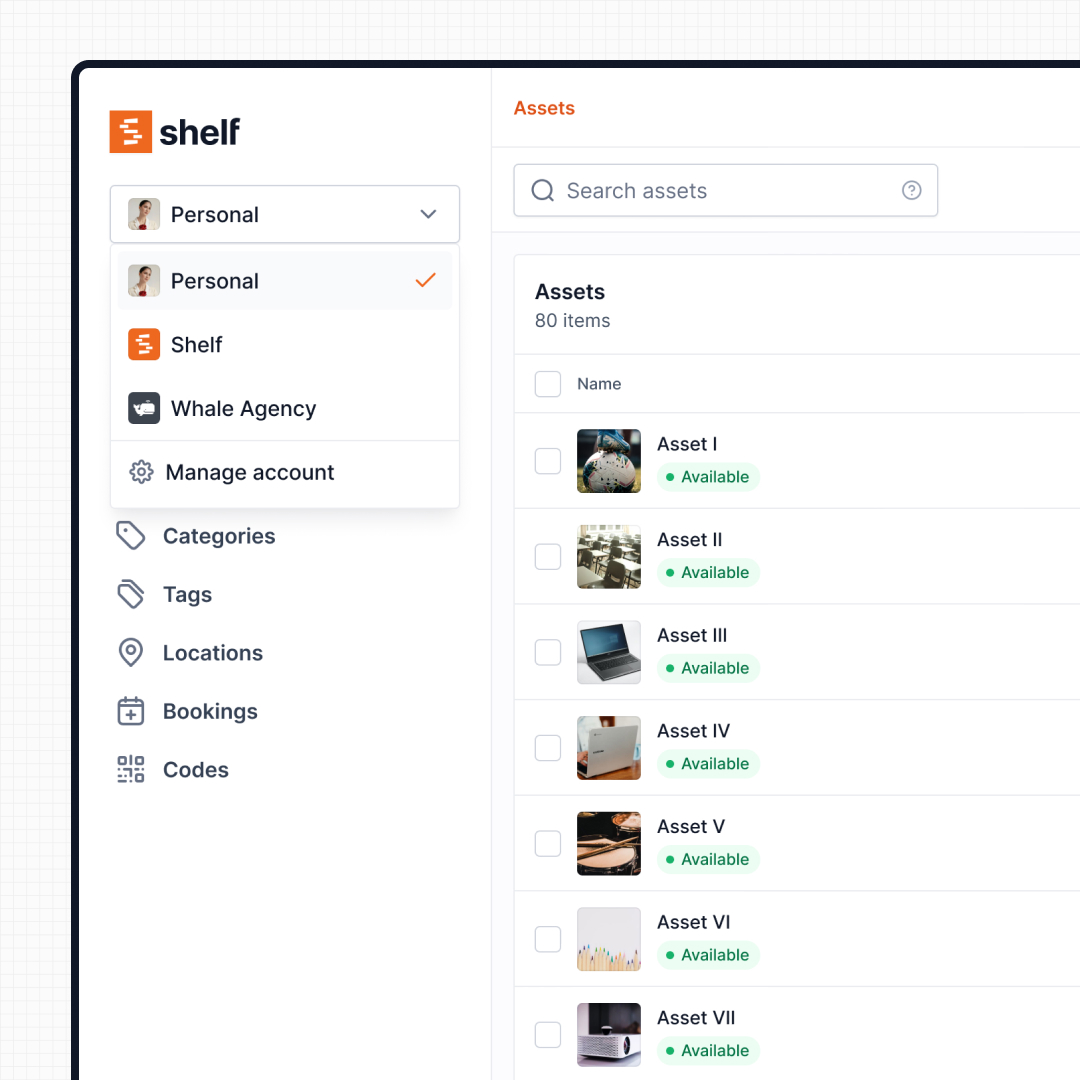
Shelf uses workspaces to separate inventories by department, program, or location. Each team manages their own equipment independently, with organization-level visibility for administrators. IT doesn't see the theater department's sound equipment, and the theater department doesn't wade through IT's laptop fleet.
See: Workspaces
When Teams Choose Shelf Instead of Asset Infinity
Teams often choose Shelf over Asset Infinity when their daily operations center on equipment circulation rather than financial asset compliance:
- Hardware budget is limited or zero: QR-first tracking eliminates RFID reader procurement, NFC tag costs, and barcode scanner purchases entirely
- Assets leave the building regularly: RFID readers only work at fixed checkpoints; QR codes work anywhere a phone goes--job sites, client offices, film locations
- Booking and scheduling are daily workflows: Reserving shared equipment, preventing double-bookings, and managing availability queues need a booking-first platform
- Kits need to stay complete: Production, education, and field teams managing grouped equipment need kit-level workflows that track components together
- Multiple departments share one platform: Workspaces let IT, facilities, and media teams operate independently without permission complexity
- Non-technical users need to participate: Students, contractors, and field staff can scan a QR code without training; RFID dashboards require administrator involvement
- Open source matters: Data sovereignty, self-hosting capability, and codebase transparency are requirements, not nice-to-haves
When Asset Infinity May Be a Better Fit
Asset Infinity has genuine strengths that matter for certain use cases:
- Depreciation and financial compliance: Organizations that need to track asset depreciation schedules (straight-line or written-down value methods) for accounting and regulatory compliance will find Asset Infinity's financial modules more mature than what Shelf offers
- Preventive maintenance workflows: Manufacturing plants, utilities, and facilities teams that need automated maintenance scheduling, breakdown ticketing, and service history documentation will benefit from Asset Infinity's maintenance management module
- ERP integration requirements: Asset Infinity offers pre-built integrations with SAP, Oracle, Microsoft Dynamics, Intune, Azure AD, and Okta--valuable for organizations deeply embedded in those ecosystems
- RFID-based bulk auditing: Warehouses and large facilities where scanning hundreds of RFID-tagged items simultaneously during physical inventory counts saves significant time compared to scanning individual QR codes
- Utility and meter monitoring: Asset Infinity includes utility monitoring capabilities for tracking equipment energy consumption and operational metrics, which falls outside Shelf's scope
Both platforms solve asset management, but they prioritize different problems. Asset Infinity is strongest when financial compliance, maintenance scheduling, and hardware-integrated tracking drive the decision. Shelf is strongest when equipment circulation, custody accountability, and booking workflows define the daily reality.
Case Studies
See how teams operate with QR-first equipment workflows:
- CES Utility Solutions — $70K Equipment Recovery
- ResQ Contact Center — 4,000+ Devices Across Multiple Sites
- HAARP — Research Equipment Accountability
- Eastern Michigan University — Theatre Equipment Management
Related Solutions
Quick comparison
| Feature | Shelf | Asset Infinity |
|---|---|---|
| Free plan with unlimited assets | Varies | |
| Open source & self-hostable | ||
| QR codes with custom branded labels | Varies | |
| Custody tracking with full audit trail | Varies | |
| Equipment bookings & reservations | Varies | |
| Kit-aware check-in/check-out | Varies | |
| Location hierarchy (up to 12 levels) | Varies | |
| CSV import from any tool | Varies | |
| Works on any device (PWA) | Varies | |
| No credit card to start | Varies |
Feature availability for Asset Infinity may vary by plan. We encourage you to verify on their website.
Compatibility Checker
Will your Asset Infinity Barcodes
Work with Shelf?
Camera preview
Supported barcode types: Code128, Code39, QR Code, DataMatrix, EAN-13, EAN-8, UPC-A, UPC-E, ITF, Code93.
If your barcode doesn't scan, it may be due to camera focus, lighting, or barcode quality. This doesn't necessarily mean your code isn't supported — try again or upload a clearer image.
Ready to switch from Asset Infinity?
Create a free account and import your data in minutes. No credit card required.
Also compare
Evaluating alternatives? See how Shelf stacks up against similar tools.




Ready to organize your assets?
Join thousands of teams who trust Shelf to manage their physical assets. Free forever, or try the Team plan free for 7 days.
Out in the field? Shelf Companion is free on iPhone & Android.