


Case Study
BullsTV / Chicago Bulls
How the Chicago Bulls' In-House Production Team Eliminated Gear Chaos with Shelf
BullsTV, the in-house content and production arm of the Chicago Bulls, eliminated double bookings and reclaimed hours every week by replacing spreadsheets with Shelf's gear tracking and booking system.
At a Glance
- BullsTV — in-house content and production arm of the Chicago Bulls
- Multiple concurrent productions — game coverage, social content, player features, community recaps, sponsor integrations
- 5+ crew members pulling gear on busy game days
- Hours saved every week on equipment tracking and coordination
- Zero double bookings since adopting Shelf
- Travel kits streamlined road game logistics across the season
About BullsTV
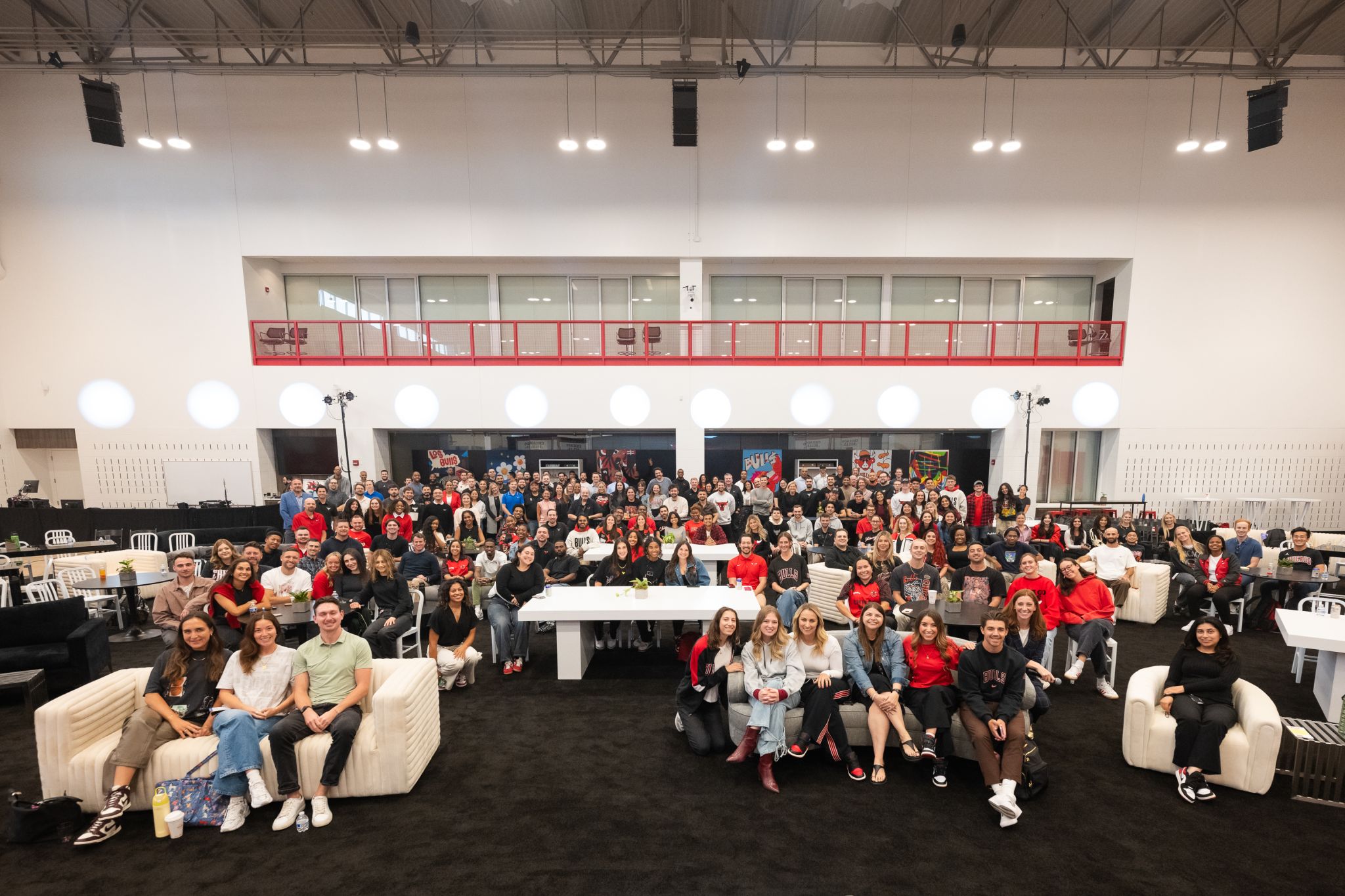
BullsTV is the content engine behind one of the most iconic franchises in professional sports. On any given week, the team is producing hype videos, player features, community recaps, sponsor integrations, behind-the-scenes access, and digital-first social content — all while keeping pace with an NBA schedule that doesn't slow down.
The team includes producers, shooters, and editors. On a busy game day or major content push, five or more people are pulling gear simultaneously — cameras, lenses, audio equipment, batteries, chargers, hard drives. The creative output is relentless, and the logistics behind it need to be just as tight.
Anya Kalfus, Assistant Producer & Coordinator, is responsible for both the creative and operational side. She helps produce shoots, coordinates logistics, films, and edits — but one of her biggest day-to-day responsibilities is making sure the right equipment is available, prepped, charged, accounted for, and returned.
"When you're supporting multiple productions — games, practices, community events, studio shoots — gear flow becomes just as important as creative execution." — Anya Kalfus, Assistant Producer & Coordinator, BullsTV
The World Before: Spreadsheets, Slack Messages, and a Little Bit of Hope
Before Shelf, BullsTV's gear management ran on a mix of spreadsheets, Slack messages, memory, and what Anya describes as "a little bit of hope." If someone grabbed a camera quickly before practice or a road trip, it might not get logged. The team relied heavily on verbal communication — which works, until it doesn't.
The pain wasn't one dramatic disaster. It was the slow accumulation of small inefficiencies that added real stress to an already fast-paced environment: not knowing who had what, double-booked equipment, scrambling before road trips, and spending valuable time physically searching for items instead of focusing on the work.
"There's nothing worse than prepping for a shoot and realizing a key lens is in someone's trunk and no one documented it." — Anya Kalfus
The breaking point wasn't a single incident. It was the realization that the team was spending too much mental energy tracking gear instead of channeling it into creative execution. Even 10-15 minutes of confusion before a shoot compounds across a full NBA season.
Finding Shelf: Built for Creatives, Not Warehouses
When BullsTV started looking for a solution, they had a clear requirement: it needed to feel built for a creative production team, not a warehouse inventory system. Most solutions on the market were either too complex or designed for a completely different workflow.
Shelf stood out because it was clean, intuitive, and easy to customize to how a sports production team actually operates. The team started by inputting all of their core gear and organizing it into logical categories and kits. Once everyone could visually see everything in one place, adoption happened naturally.
Within about a month, using Shelf became second nature.
How It Works Now: From Chaos to Clarity
Today, shoot prep at BullsTV follows a simple, repeatable flow: check the calendar to see what's already booked, reserve gear ahead of time, assign equipment to the shooter, and check it back in when it's returned.
When multiple productions are running simultaneously — say a home game, a social media shoot, and a feature piece all on the same day — the team can see availability instantly. If something's booked, they adjust proactively instead of discovering conflicts five minutes before tip-off.
Road Games: Where Organization Becomes Everything
Travel introduces the highest risk for misplaced equipment. BullsTV now builds out travel kits ahead of time — cameras, lenses, audio, batteries, chargers, hard drives — bundled and assigned as single units.
"Instead of selecting 12 individual items, we pull one 'Road Camera Kit.' It speeds up prep and reduces the risk of forgetting a key piece." — Anya Kalfus
Having documentation for every item that leaves the building gives the entire team peace of mind, especially when gear is moving between cities on a tight schedule.
The Results: Accountability, Time, and Peace of Mind
The impact showed up in two ways — the tangible and the cultural.
On the tangible side, the team conservatively saves a couple of hours per week across the group on equipment management. Missing cables and card readers get tracked down quickly because they were properly checked out. Double bookings are a thing of the past.
But the cultural shift may matter even more. When gear is tracked and assigned, people are more mindful. Everyone knows where things live and who's responsible. The accountability isn't punitive — it's just clarity.
"Gear management sounds operational, but it directly impacts creativity. The more organized your equipment system is, the more your team can focus on storytelling instead of logistics." — Anya Kalfus
The Feature That Changed Everything
When asked which Shelf feature the team couldn't live without, Anya didn't hesitate: Bookings. Being able to see who has what, at what time, is the foundation everything else runs on.
For a production team operating at the pace of a professional sports organization, that visibility isn't a nice-to-have. It's what makes the difference between a smooth game day and a scramble.
What Anya Would Tell Other Sports Production Teams
"Gear management sounds operational, but it directly impacts creativity. The more organized your equipment system is, the more your team can focus on storytelling instead of logistics." — Anya Kalfus, Assistant Producer & Coordinator, BullsTV
If your team is still relying on spreadsheets, memory, or Slack threads to track production gear — BullsTV's story is proof that it doesn't have to be that way.
“When you're supporting multiple productions — games, practices, community events, studio shoots — gear flow becomes just as important as creative execution.”
Ready to get organized?
Join thousands of teams who track their assets with Shelf.