Batch Scanning Actions
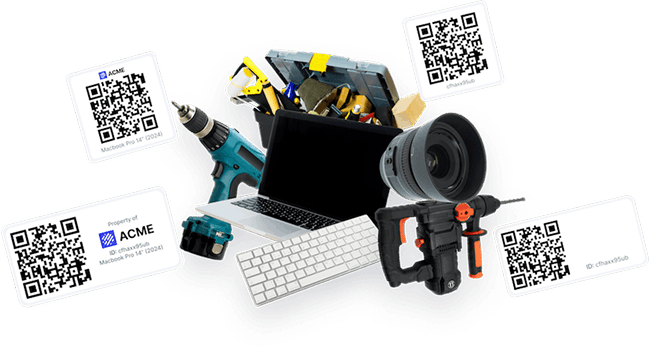
Shelf's Batch QR Scanning feature enables users to perform actions on multiple assets simultaneously by scanning their QR codes in succession, significantly improving efficiency when managing groups of assets.
Key Benefits
- Time Savings: Process multiple assets in a single operation instead of individually
- Streamlined Workflows: Ideal for inventory counts, location changes, and custody transfers
- Error Reduction: Confirm all actions before execution to prevent mistakes
- Simplified Auditing: Quickly update information for batches of assets during audits
Accessing Batch QR Scanning
- Open the Shelf mobile app or mobile website
- Tap the Scanner button in the navigation
- When the scanner opens, you'll see a dropdown button labeled "Action:" with the current selected action
- Tap this dropdown to reveal the available actions:
- View asset (single action - default)
- Assign custody (bulk action)
- Release custody (bulk action)
- Update location (bulk action)

Batch Actions Available
Assign Custody
Use this option to transfer custody of multiple assets to a team member in one operation.

- Select Assign custody from the scanner dropdown
- Scan each asset's QR code you want to include in the batch
- The system will display a count of scanned assets (e.g., "Items scanned (8)")
- You'll see a list of the scanned assets, with options to remove individual items (trash icon)
- Select the team member to assign custody to from the dropdown
- Tap the orange Assign custody button to complete the action
Quantity-tracked assets. A quantity-tracked asset is a pool of units, so its row in the list gets a Qty field showing how many units are free to hand over, for example 1 / 46. It starts at 1; set it to the number the person is taking. Only free units count toward that maximum: units already in someone's custody, allocated to a kit or out on a booking are not offered. A pool with some units out can still be scanned, as long as some are left.
A pool kept at two or more locations also gets a compact From location choice under its title, pre-filled with the location that has the most units left, and its Qty cap follows the location you pick. A row whose chosen location has nothing left is blocked as no units left at the chosen location: pick another location for it, or remove it. If a location runs short between the scan and the submit, nothing is assigned and the refusal names the asset with the numbers, for example "Spanner" (asked for 3, 2 left at Debriefing Room). See Which location the units come from.
Release Custody
This option allows you to release multiple assets from custody simultaneously.
- Select Release Custody from the scanner dropdown
- Scan each asset's QR code you want to release
- The system will display a count of scanned assets
- After scanning all desired assets, tap Continue
- Review the list of assets and confirm the release
Quantity-tracked assets. Each quantity-tracked row gets a Qty field capped at the units held in custody, so you can take back part of a hold. The release scan does not ask whose units to take back, so it works while one person holds units of that asset. If several people do, release it from the asset's own custody list, where each holder has a row. Units held because the asset's kit is in custody go back by releasing the kit. If the holder's units came from more than one location, the scan takes them back from the location holding the most first; to choose the location yourself, release from the asset page, where the dialog asks per location.
In the Shelf Companion app. The Shelf Companion app scanner does the same since the update of 2 October 2026. Each quantity-tracked row in its Assign custody and Release custody list carries a unit count, for example 3 / 10 pcs. Tap it to open the Units to assign or Units to release sheet. Assign starts at 1 unit and stops at the free units. Release starts at every unit the holder has, because giving it all back is the usual return. When you release units of a one-way asset, the confirm tells you that "One-way units are recorded as used up. That permanently reduces total stock." The phone shows the same quantity blockers as the web, listed below. The phone's sheets do not ask which location the units come from yet, so units assigned from the phone on a pool kept at several locations are recorded without one.
Update Location
Change the location of multiple assets at once with this option.
- Select Update Location from the scanner dropdown
- Scan each asset's QR code you want to relocate
- The system will display a count of scanned assets
- After scanning all desired assets, tap Continue
- Select the new location
- Review the list of assets and confirm the location update
You can mix kit QR codes into the same batch. A scanned kit shows up in the list with its asset count, and sending the batch to a location moves the kit and every asset inside it. See Kits for exactly how that cascade works for individually tracked and quantity-tracked members.
Handling Conflicts
When using batch actions, the system automatically checks for potential conflicts. Different actions have different types of blockers:

For Assign Custody
- Individually tracked assets already in custody of someone else
- Individually tracked assets currently checked out
- Individually tracked assets that are part of a kit
- Quantity-tracked assets with no units available: every unit is already in custody, allocated to a kit, or out on a booking
- Quantity-tracked assets with no units left at the chosen location (web scanner, pools kept at two or more locations): pick another location or remove the row
- Kits already in custody
- Kits with assets in custody
- Kits that are checked out
- Invalid or unregistered QR codes
For Release Custody
- Individually tracked assets not currently in custody
- Individually tracked assets that are part of a kit
- Quantity-tracked assets with no units in custody
- Quantity-tracked assets held only through a kit (scan the kit's QR to release the whole kit)
- Quantity-tracked assets held by more than one person (release them from the asset's custody list)
- Kits not in custody
- Invalid or unregistered QR codes
For Update Location
- Invalid or unregistered QR codes
Update Location has no other blockers. Assets in custody, checked-out assets, and kits are all accepted, and a kit in the batch relocates its member assets along with it.
If conflicts are detected, the system will:
- Alert you with a yellow warning banner showing "Unresolved blockers" and the number of issues
- Explain the specific issues (e.g., "4 assets are already in custody")
- Provide options to resolve conflicts, such as "Remove from list" for individual items or "Resolve all" for all conflicts
- Only enable the action button once all conflicts are resolved
Best Practices
- Organize Assets First: Group assets physically before scanning to improve efficiency
- Use in Well-Lit Areas: Ensure adequate lighting for faster QR code recognition
- Verify Count: Always check that the number of scanned assets matches your expectations (visible at the top of the scan list)
- Use the Clear List Option: If you need to start over, use the "Clear list" button in the top right
- Remove Individual Items: Use the trash icon next to each asset to remove it from the batch if needed
- Review Before Confirming: Take a moment to review the final list before completing the action
- Deal with Conflicts Promptly: Use the "Resolve all" button to quickly address multiple issues at once

Common Use Cases
Team Member Onboarding/Offboarding
When a new team member joins or leaves, efficiently transfer multiple assets to or from their custody.
Asset Relocations
When moving equipment between locations (e.g., from storage to a project site), update all assets' locations in one operation.
The Scanning Interface
When scanning in batch mode, you'll notice several key interface elements:
- Action Dropdown: Shows your currently selected action (e.g., "Action: assign custody")
- Scan Counter: Displays the number of items scanned (e.g., "Items scanned (12)")
- Asset List: Shows all scanned assets with labels indicating their type
- Action Button: The orange button at the bottom to complete the selected action
- Blocker Warnings: Yellow warning banners that appear when there are issues to resolve
Frequently Asked Questions
How many assets can I process in a single batch?
There is no strict limit to how many assets you can include in a batch action.
What happens if I scan the same asset twice during a batch scan?
The system will automatically detect duplicate scans and only include each asset once in the final action.
Can I collapse or expand the scanned items list?
Yes, you can use the arrow buttons at the top of the items list to collapse or expand it, making it easier to continue scanning without the list taking up too much screen space.
Can I cancel a batch action after I've started scanning?
Yes, you can tap the "Back" button or "Clear list" at any time during the scanning process to abandon the current batch action.
Can all user roles use batch scanning?
Batch scanning capabilities depend on your user role:
- Administrators: Full access to all batch actions
- Self-service users: Can use batch scanning for operations within their permission level
- Base users: Limited to viewing assets via QR scanning
For more information on user roles and permissions, see the User Roles and Permissions guide.
Ready to try Shelf?
Put what you're learning into practice. Free plan available — no credit card required.